One of the most common questions Sydney parents ask is also one of the hardest to answer with a single number: what age should a child start learning AI? Some families worry they might be starting too late. Others worry they will start too early and turn a good idea into one more source of pressure. Both concerns are reasonable.
The most useful answer is that AI does not need to begin as a high-pressure, highly technical subject. For children, the best starting point is usually not about chasing the earliest possible age. It is about noticing when your child is ready to give instructions, test what happened, and stay curious when the first result is imperfect. In other words, readiness matters more than a birthday.
That is especially true now that children can build with AI in more than one way. A younger child might start by giving simple creative instructions and seeing cause and effect. An older beginner might be ready for AI-assisted game building straight away. If you are still deciding which tools fit best, our guide to Scratch, Python, and AI-assisted coding can help with that comparison. The age question comes first because it shapes how the tool should be introduced.
Do not ask "how young?" Ask "ready for what?"
Parents often hear broad claims that children should start coding at five, seven, or ten. Those statements are usually too blunt to be helpful. A six-year-old who loves pattern games, can follow multi-step instructions, and enjoys explaining their ideas may be more ready for a guided AI activity than an older child who freezes the moment something goes wrong.
What you are really looking for is a starting format that matches your child’s stage.
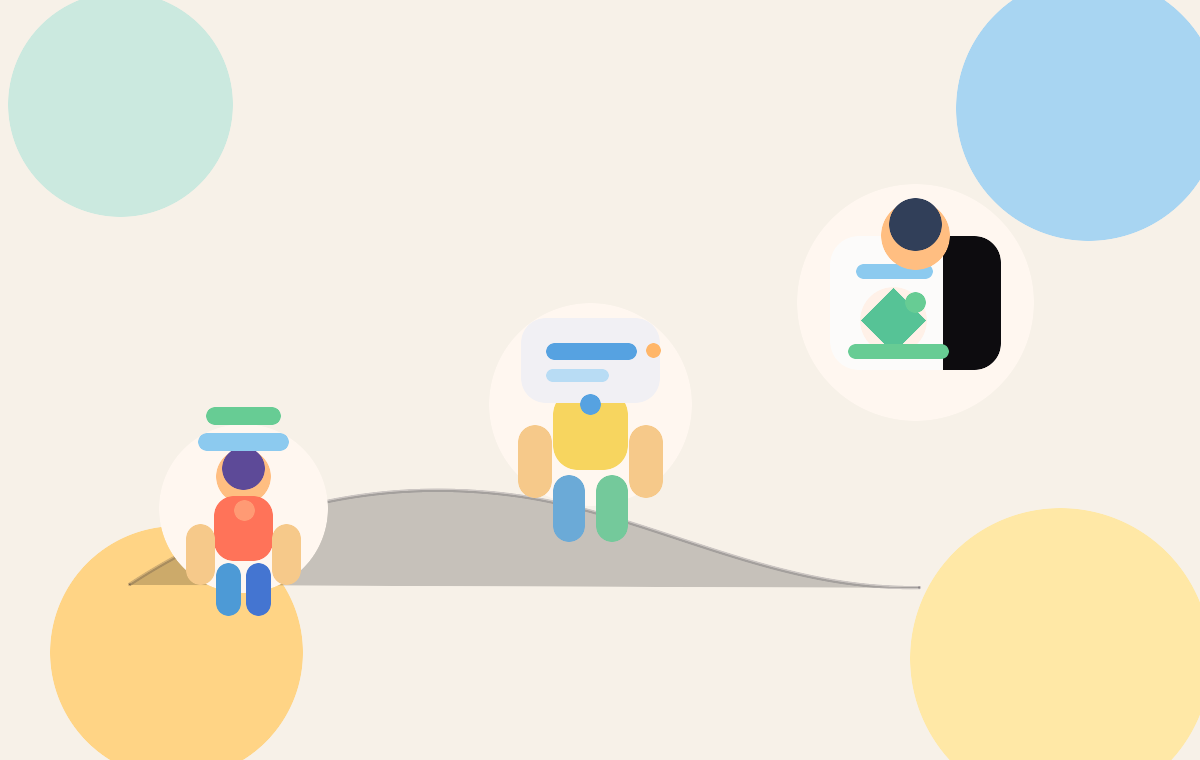
- Early primary children often do best with guided play, storytelling, and visible cause-and-effect rather than open-ended coding tools.
- Middle primary children are often ready to turn ideas into short prompts, test outcomes, and improve simple projects.
- Older primary and early secondary children can usually handle more independence, more debugging, and more ownership of a built project.
That staged view matters because "learning AI" can mean very different things. It might mean learning how to talk clearly to a tool. It might mean building a simple game with support. It might mean learning when to trust, question, or revise what the AI suggests. Those are different levels of readiness.
A good first window for most children
For many families, a comfortable first window sits somewhere in the primary years, but not always in the same form. Around ages six to eight, children are often ready for highly guided, adult-supported activities where they describe ideas, spot patterns, and see how a small change affects the result. Around ages eight to ten, many children are ready to build short, concrete projects with more real agency. By the later primary years, plenty of children can handle a stronger AI-assisted coding experience, as long as the teaching stays scaffolded.
The key point is that you do not need to wait until a child can write polished code before they can begin learning useful AI habits. Nor should you put a young child in front of an open-ended tool and expect good learning to happen automatically. The strongest starts are guided, specific, and child-owned.
Signs your child may be ready now
If you want a practical filter, look for behaviour rather than labels. A child is often ready for an age-appropriate AI learning experience when they can do most of the following:
- Explain what they want to make. It can be simple: a snake game, a funny story, a scoring system, a moving character.
- Follow a short sequence of steps. They do not need perfect attention, but they should tolerate a process that unfolds in stages.
- Notice when something is wrong. Real learning starts when a child can say, "That is not what I meant."
- Try again after a mistake. They do not need to love bugs, but they should be able to recover with support.
- Stay interested in improving the project. Curiosity about version two is one of the best readiness signals.
If those behaviours are emerging, the child may be ready even if they have never touched a coding platform before. If those behaviours are not there yet, it does not mean AI is "too hard". It usually means the starting format should be more guided, more playful, or shorter in duration.
What is too early?
Too early is not just about age. It is usually about mismatch. A child is probably being started too early, or in the wrong format, if the activity depends on long stretches of reading, abstract instructions they cannot hold in mind, or independent judgement they have not developed yet.
Another warning sign is when the child becomes a spectator. If the tool produces something fancy and the child cannot explain what happened, the experience may look impressive while teaching very little. That is why we keep returning to the same principle: AI should be a coach, not a ghostwriter. If you want a parent-friendly checklist for that distinction, our article on AI as a coach, not a ghostwriter is worth reading before you enrol anywhere.
For younger children especially, starting well often means reducing freedom at the beginning, not increasing it. Clear prompts, teacher guidance, and smaller projects are not limitations. They are what make real learning possible.
How the starting point changes by age stage
For children in the early primary years, the best AI experiences are usually conversational, visual, and short. Think storytelling logic, simple game rules, or guided "what should happen next?" moments rather than long sessions in a code editor. The goal is to help them see that instructions shape outcomes.
For children in the middle primary years, many are ready for genuine project loops: idea, prompt, test, fix, improve. This is often the sweet spot for first AI-assisted building because children can see a result quickly without carrying too much technical load. They still need support, but they are increasingly capable of making choices that matter.
For older primary and early secondary students, AI can become a more direct building partner. They are often ready to debug, compare options, and shape the project more independently. That is where a structured build like our Snake game lesson can work especially well. It gives a child a real project outcome while keeping them responsible for the decisions.
What Sydney parents should look for in a first program
Once your child seems broadly ready, the next question is environment. The best first program is not necessarily the most advanced-looking one. It is the one that gives your child enough support to succeed while still making them think.
- Look for small, concrete project outcomes. A child should finish with something they can show and explain.
- Check how much of the work the child actually owns. Personal choices, revisions, and debugging matter more than polished output.
- Ask how the adults handle mistakes. Good teachers use errors as part of the process rather than quietly taking over.
- Choose a format that matches your child’s energy. If you are weighing a term rhythm against a shorter burst, our guide to after-school classes versus holiday workshops can help.
This is also where safety and trust come in. Children should not be left to navigate open-ended AI tools without boundaries. A strong beginner environment keeps the adult in the loop, uses age-appropriate tasks, and focuses on building judgement rather than endless output.
The best age is the age your child can start with confidence
Parents sometimes feel they need the perfect answer before they begin. Usually, the better goal is a confident first step. If your child can describe an idea, tolerate a few mistakes, and stay interested in making the project better, they may be ready now for the right kind of AI learning experience. If they are not there yet, that is not a failure. It just means the starting point should be lighter, more playful, or later.
What matters most is not getting your child into AI as early as possible. It is helping them begin in a way that builds agency, judgement, and excitement. That is what makes them want to keep going.
If you want a practical next step, explore our Airbotix programs. They are designed to meet children at different stages while keeping the same core principle: the child stays the builder.