
THE AIRBOTIX LEARNING PATHWAY

One pathway. Eight levels. Years of real growth.

See what your child can learn now, what comes next, and how four complete term courses build one purposeful learning year — from interactive reading to making, launching and leading with AI.

Ready to plan a year? Talk through the right level and all four terms.

8 levels · 32 term courses

Four complete term courses make one learning year.

This is the long-term Airbotix curriculum families can plan around, not a collection of disconnected activities. We open cohorts progressively and confirm the teacher, format, dates and price before enrolment.

  • Complete L1–L8 roadmap
  • Four Term Courses per Level
  • Holiday workshops are optional

Looking for dates, locations and currently open cohorts? See the live class and camp schedule.

Ask about a full-year plan
60-second pathway planner

Find your child's starting point.

Choose an age and answer four quick questions to see a suggested Level and course plan.

This is a planning guide, not a test, diagnosis or guaranteed result. No child information is saved.

Select an age to see the relevant part of the L1–L8 pathway.
Four stages of growing independence

What matters most changes as children grow.

Stages group the capability journey into four easy chapters. Levels remain the formal progression used for placement and yearly planning.

Eight formal levels

Explore the complete L1–L8 pathway.

Evidence families can see

Progress ends in work, feedback and explanation—not worksheets alone.

Every Term1

Challenge & Showcase

The final lesson tests the project, invites feedback and gives the child something worth showing.

Every Level Year2

Four finished projects

Families can see four Term outcomes, improvement evidence and a growing project portfolio.

From Level 43

Creator pitch & reflection

Children explain what they made, what feedback changed and what they—not the AI—contributed.

Levels 7–84

Launch, pilot & opportunities

Students produce launch or pilot evidence. Suitable work may be prepared for approved competitions and external showcases.

Competition entry depends on student readiness, eligibility, safeguarding approval and the available competition calendar.

Story BlocksLevel 1 · Ages 5–6

Story Explorer

Listen, sequence, predict and retell a short story.

By the end of the year: Repair a story sequence and complete a first interactive story world.

What your child builds this year

  • Listening & comprehension
  • Sequencing & prediction
  • Retelling & expression
  • Learning confidence
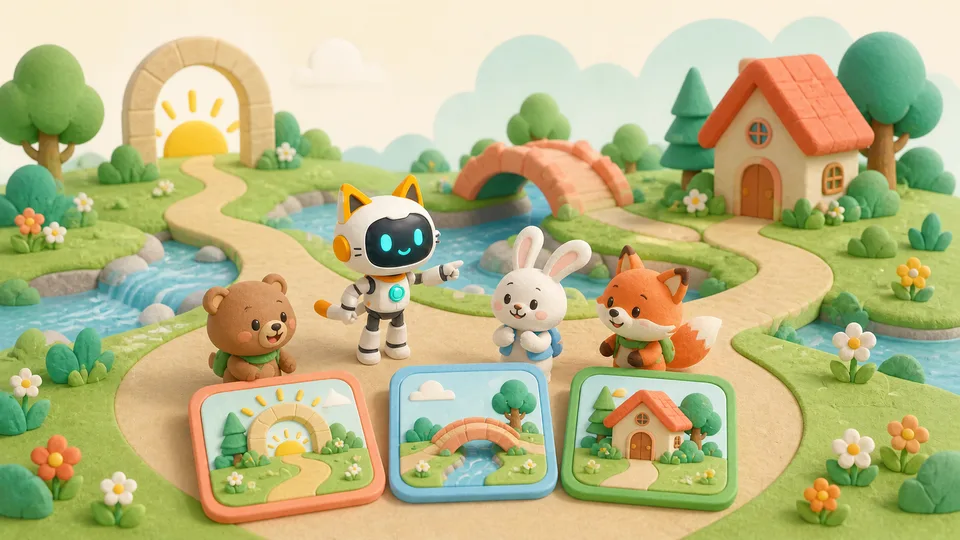
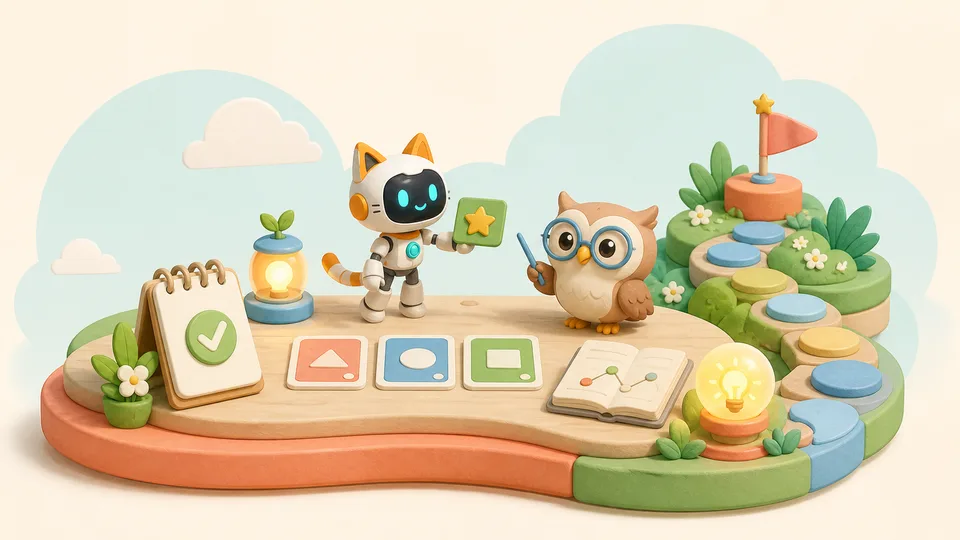
  1. Robot and animal characters arranging story scenes along a pathTerm 1

    Story Steps

    Find the character, place and goal, then put the story in order.

    Your child will build

    • Story sequencing
    • Reading comprehension
    Part of the full-year pathway
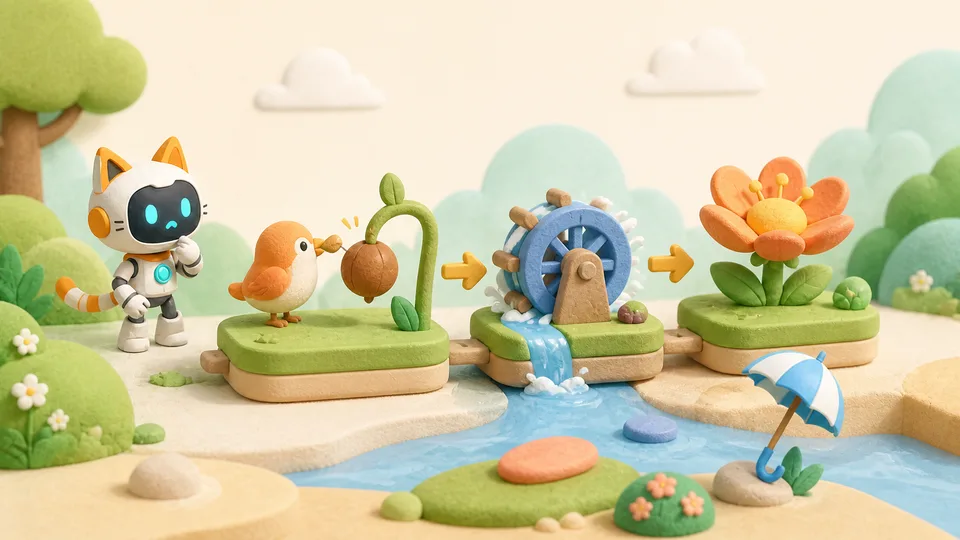
  2. Robot observing a playful cause-and-effect chain in a gardenTerm 2

    Why Did It Change?

    Notice cause and effect and repair a change that does not make sense.

    Your child will build

    • Cause & effect
    • Explaining change
    Part of the full-year pathway
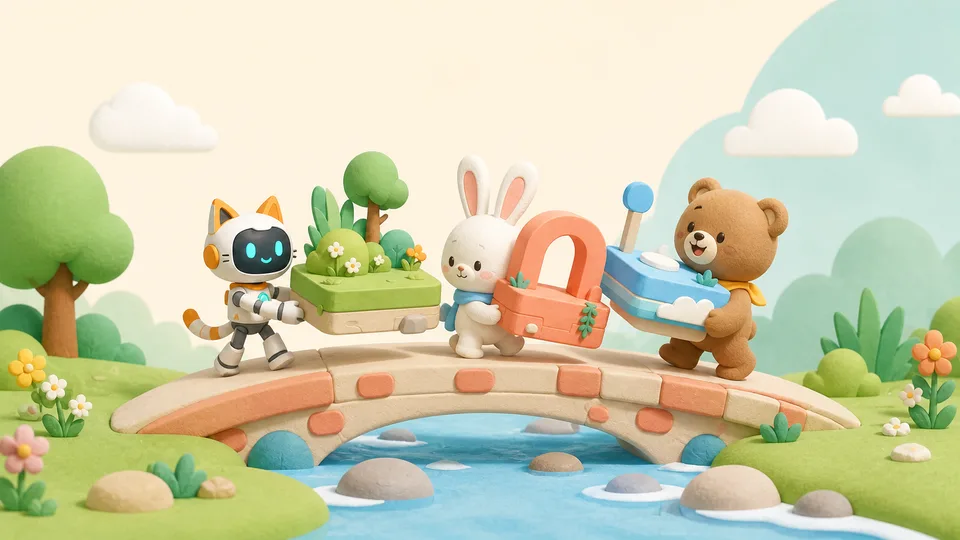
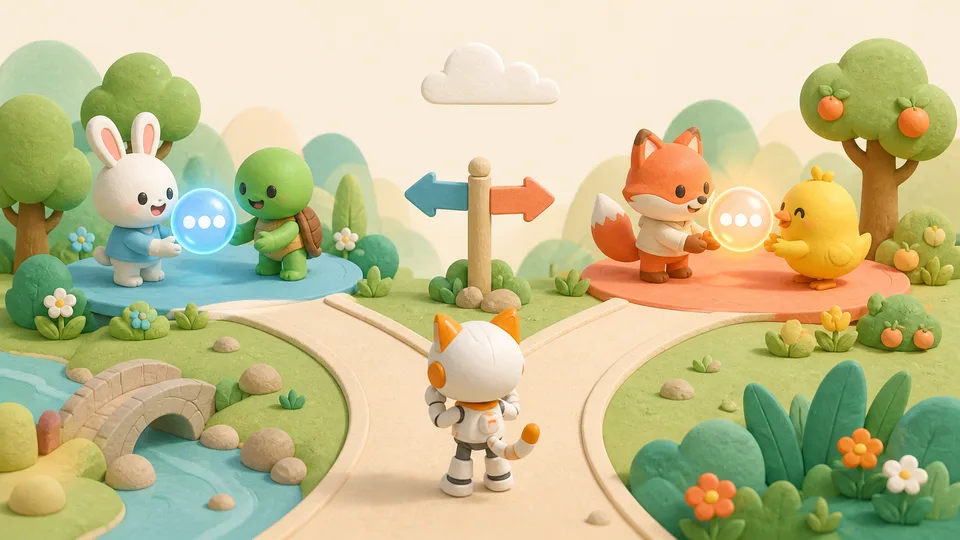
  3. Robot and animal friends cooperating across a small bridgeTerm 3

    Characters Together

    Read character needs, turn-taking, responses and simple cooperation.

    Your child will build

    • Character perspective
    • Cooperation
    Part of the full-year pathway
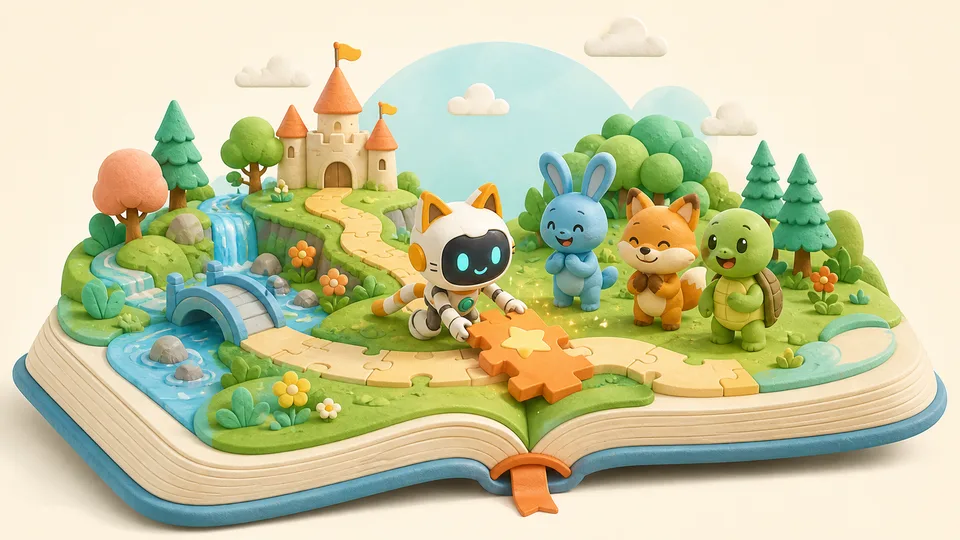
  4. Robot completing a miniature story world inside an open bookTerm 4

    My First Story World

    Choose characters, places and events to complete an interactive story.

    Your child will build

    • Story retelling
    • Creative choices
    Part of the full-year pathway

A child may join at the right term after placement. Families can also plan all four terms as one continuous learning year.

Plan the Level 1 year
Story BlocksLevel 2 · Ages 7–8

Story Maker

Use clues and character motives to explain why events happen.

By the end of the year: Create an interactive story with characters, clues and a clear ending.

What your child builds this year

  • Cause & effect
  • Evidence & inference
  • Story adaptation
  • Cooperation & communication
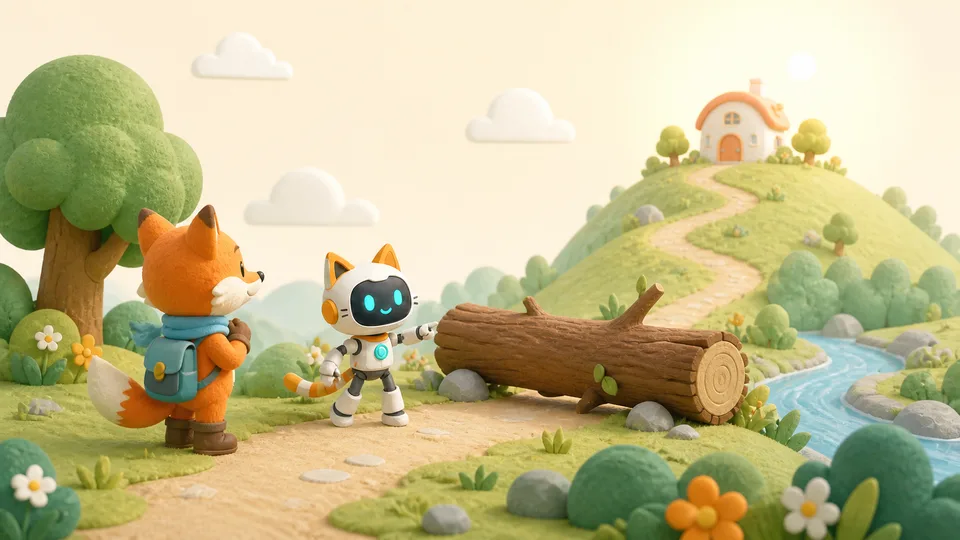
  1. Robot helping a fox plan a route past an obstacleTerm 1

    Character Quest

    Understand what a character wants, what blocks them and what happens next.

    Your child will build

    • Character motivation
    • Predicting outcomes
    Part of the full-year pathway
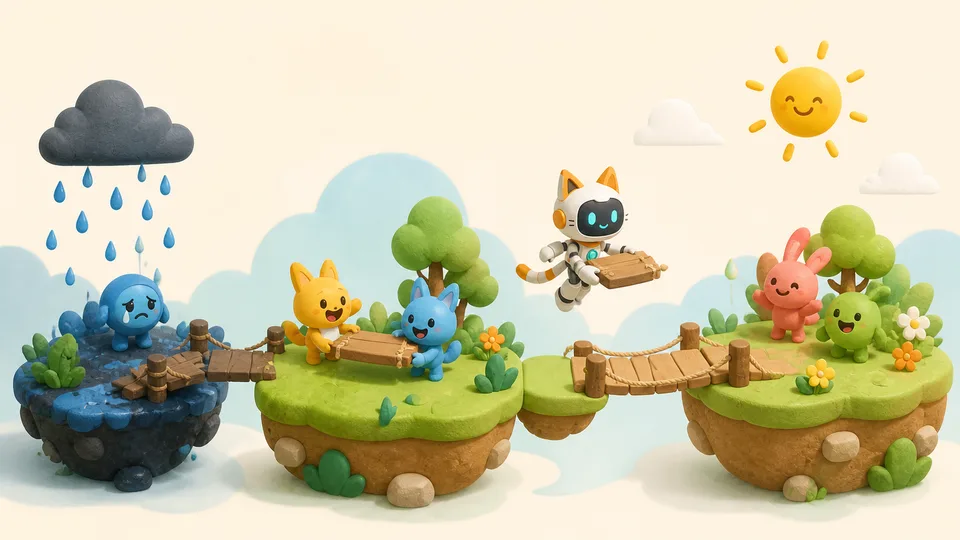
  2. Robot connecting three story islands with bridgesTerm 2

    Story Connections

    Connect events into a clear beginning, development and ending.

    Your child will build

    • Narrative structure
    • Connecting events
    Part of the full-year pathway
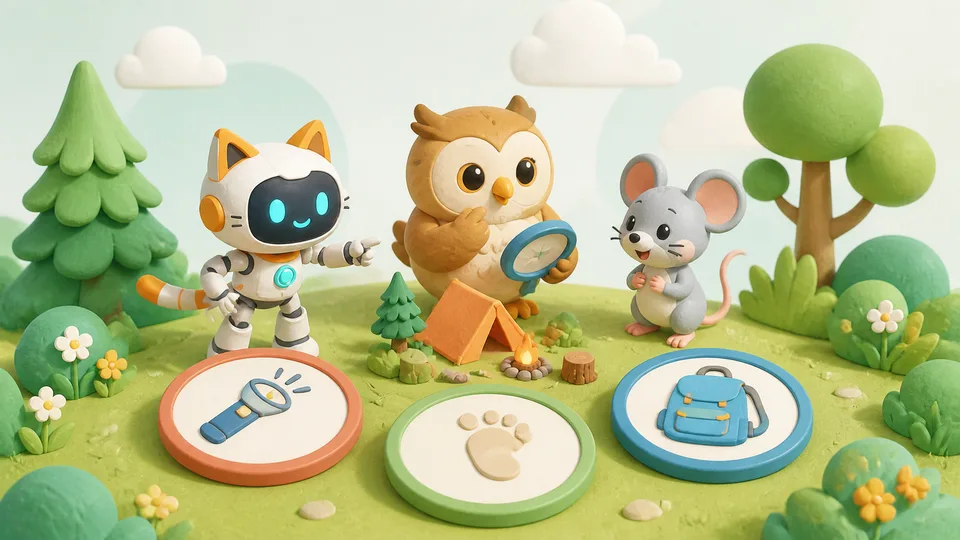
  3. Robot, owl and mouse comparing clues in a woodland mysteryTerm 3

    Clues & Teamwork

    Compare clues and help several characters solve a problem together.

    Your child will build

    • Evidence & inference
    • Team problem-solving
    Part of the full-year pathway
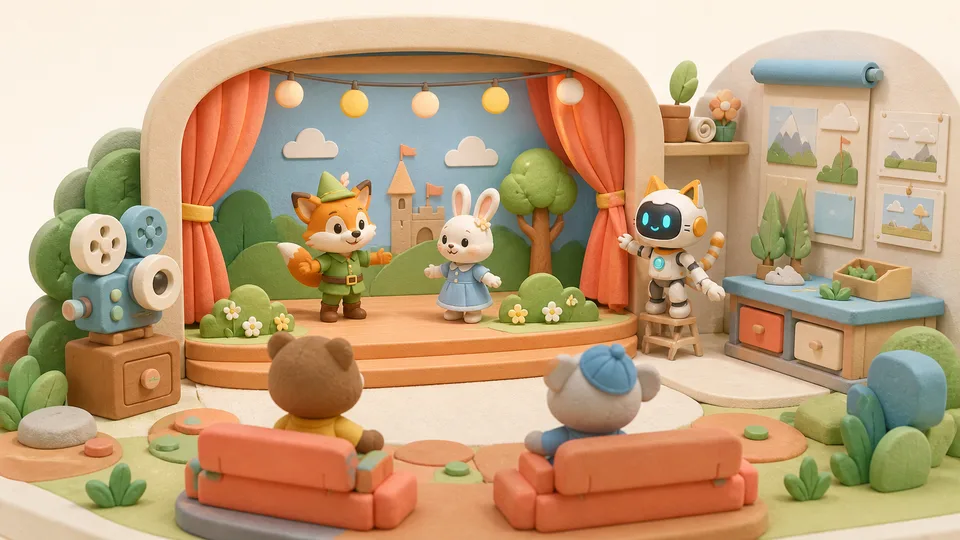
  4. Animal characters rehearsing and testing a story on a small stageTerm 4

    Story Maker Studio

    Adapt, perform, test and improve one complete story for an audience.

    Your child will build

    • Audience awareness
    • Feedback & revision
    Part of the full-year pathway

A child may join at the right term after placement. Families can also plan all four terms as one continuous learning year.

Plan the Level 2 year
Story BlocksLevel 3 · Ages 8–10

Story Creator

Plan a complete story world, then test it with a real reader.

By the end of the year: Let another child experience the story independently and improve it from feedback.

What your child builds this year

  • Systems & rules
  • Reader-centred design
  • Feedback & revision
  • Independent planning
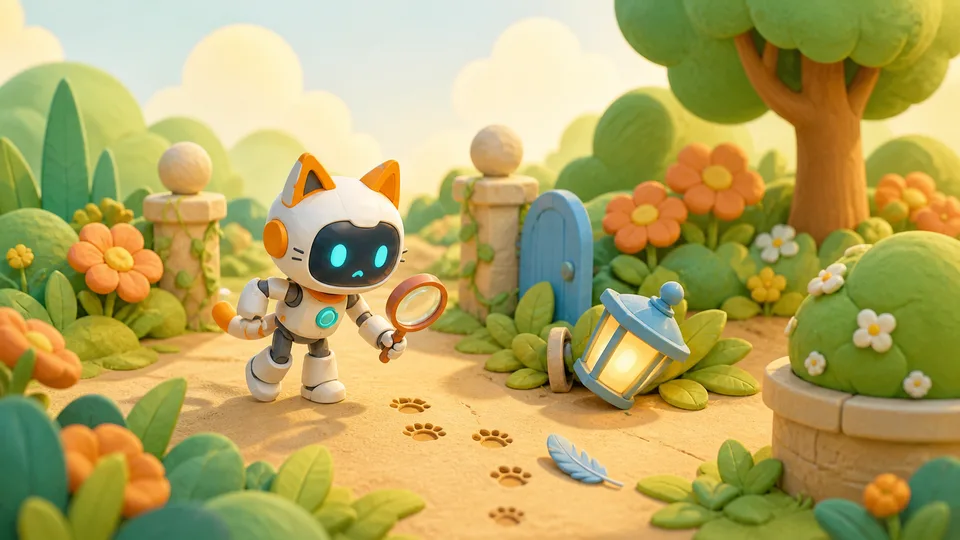
  1. Robot detective examining footprints and clues in a gardenTerm 1

    Mystery & Evidence

    Track people, events and clues, using evidence to repair story gaps.

    Your child will build

    • Evidence-based reasoning
    • Repairing story gaps
    Part of the full-year pathway
  2. Robot testing rules across three connected fantasy worldsTerm 2

    Worlds & Rules

    Build consistent world rules and test what changes when a rule moves.

    Your child will build

    • Systems & rules
    • Testing consequences
    Part of the full-year pathway
  3. Characters exchanging messages at a branching story pathTerm 3

    Messages & Choices

    Explore how information and choices change character actions and outcomes.

    Your child will build

    • Information & choices
    • Comparing outcomes
    Part of the full-year pathway
  4. Robot presenting a complete interactive story world to test readersTerm 4

    Story Creator Showcase

    Plan, test, improve and present an original interactive story world.

    Your child will build

    • Independent planning
    • Reader testing
    Part of the full-year pathway

A child may join at the right term after placement. Families can also plan all four terms as one continuous learning year.

Plan the Level 3 year
AI BuilderLevel 4 · Ages 8–10+

AI Builder

Discover AI coding through fun, personal projects worth sharing.

By the end of the year: Break down an idea, build a first version, fix a problem and give a Creator Pitch.

What your child builds this year

  • Project breakdown
  • Responsible AI judgement
  • Debugging & iteration
  • Creator pitch
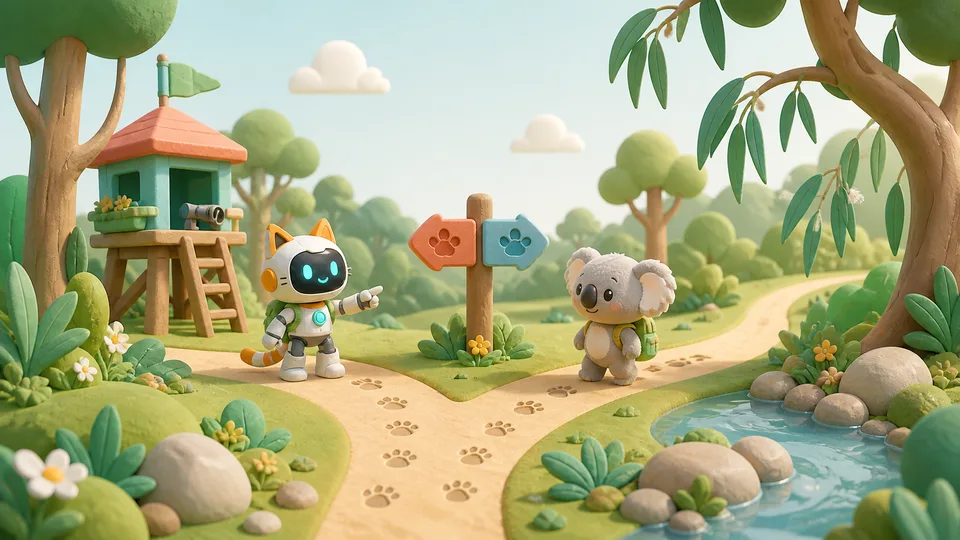
  1. Robot wildlife ranger helping a koala choose a safe forest pathTerm 1

    Wildlife Ranger Mission

    Turn animal needs, habitats and real safety rules into a playable mission.

    Your child will build

    • Knowledge-to-game design
    • Project breakdown
    Part of the full-year pathway
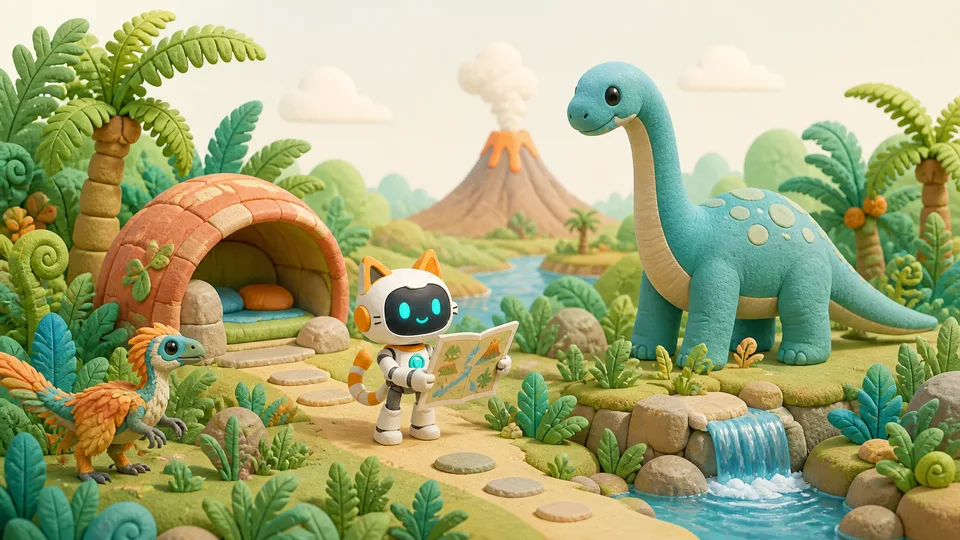
  2. Robot exploring a friendly prehistoric world with dinosaursTerm 2

    Dinosaur Survival Mission

    Learn about dinosaurs and turn checked facts into a short survival animation.

    Your child will build

    • Fact checking
    • Logic & animation
    Part of the full-year pathway
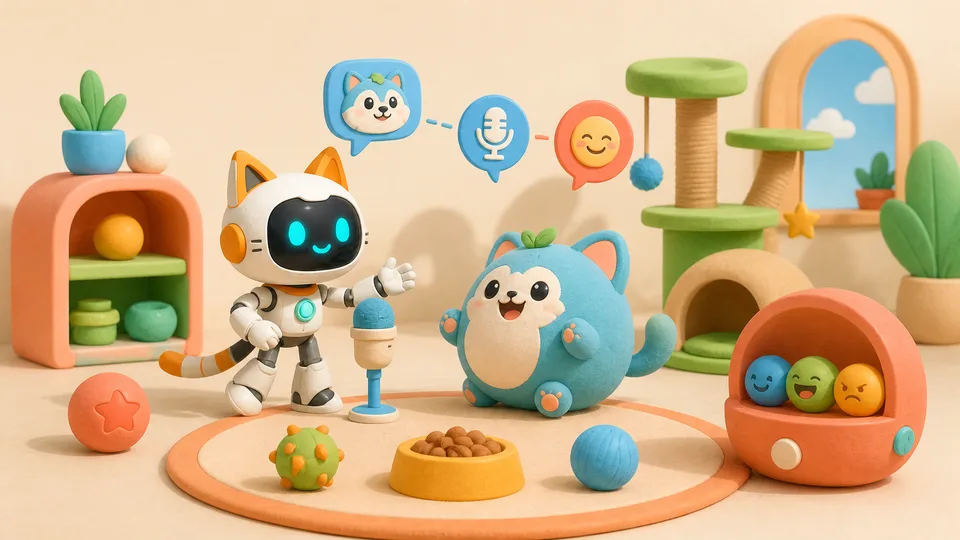
  3. Robot interacting with an original talking pet and mood controlsTerm 3

    My Talking AI Pet

    Create a pet with images, voice, moods, a Star budget and a shareable experience.

    Your child will build

    • AI media judgement
    • Budget decisions
    Part of the full-year pathway
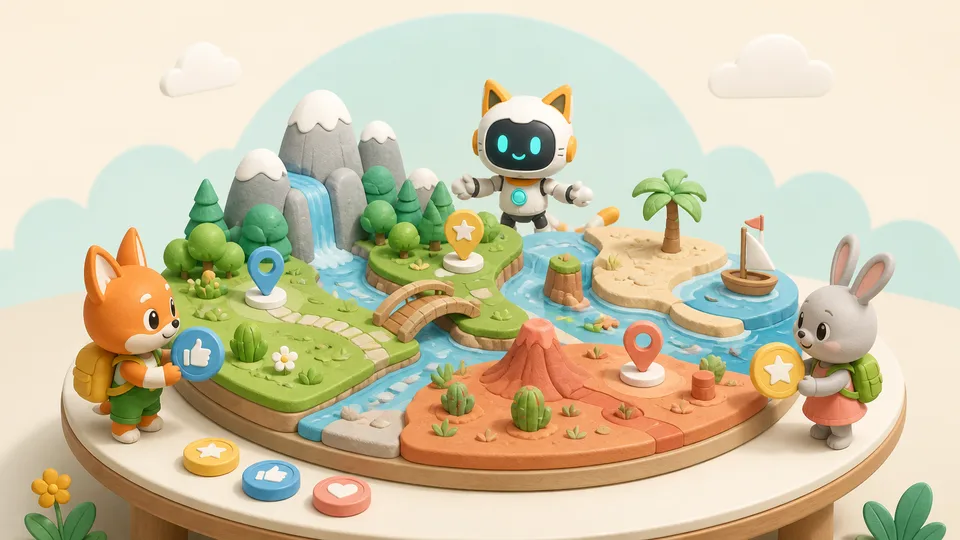
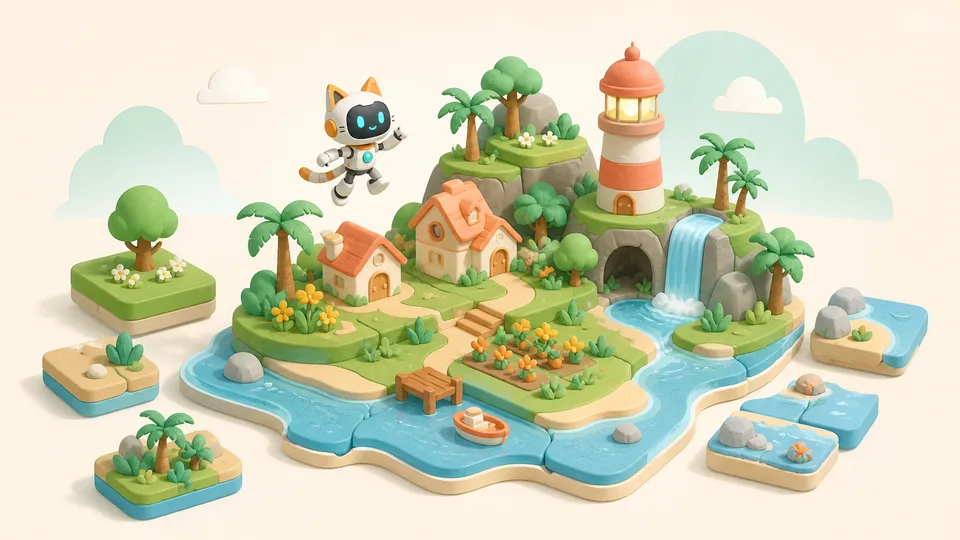
  4. Robot assembling a miniature island with a village and lighthouseTerm 4

    Build Your Own Island

    Design an island map with places, residents, interactions and a hidden surprise.

    Your child will build

    • World design
    • Interaction debugging
    Part of the full-year pathway

A child may join at the right term after placement. Families can also plan all four terms as one continuous learning year.

Plan the Level 4 year
AI BuilderLevel 5 · Ages 10–12

User-centred AI Builder

Build for a specific user and improve the work from observation.

By the end of the year: Ship four frontend projects with clear user-test and improvement evidence.

What your child builds this year

  • User empathy
  • Frontend product thinking
  • User testing
  • Evidence-led improvement
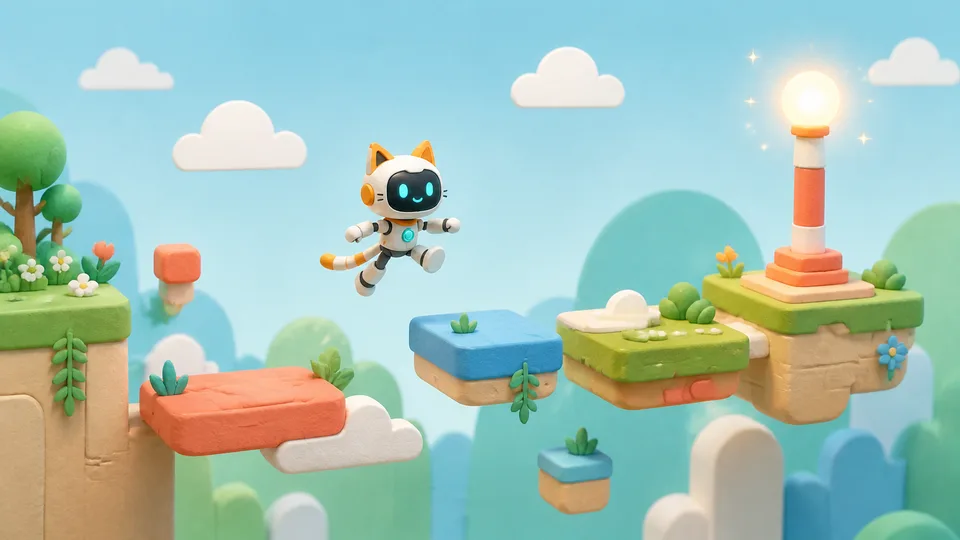
  1. Airbotix robot jumping through an original platform game worldTerm 1

    Build a Super Mario Game with AI

    Design, test and rebalance a complete platform game for a target player.

    Your child will build

    • Player empathy
    • Playtesting & balancing
    Part of the full-year pathway
  2. Robot and owl learning buddy arranging quizzes and progress stepsTerm 2

    Build a Personal Learning Buddy

    Create a trustworthy quiz coach or tutor for one learner and one real need.

    Your child will build

    • Learner empathy
    • Trustworthy feedback
    Part of the full-year pathway
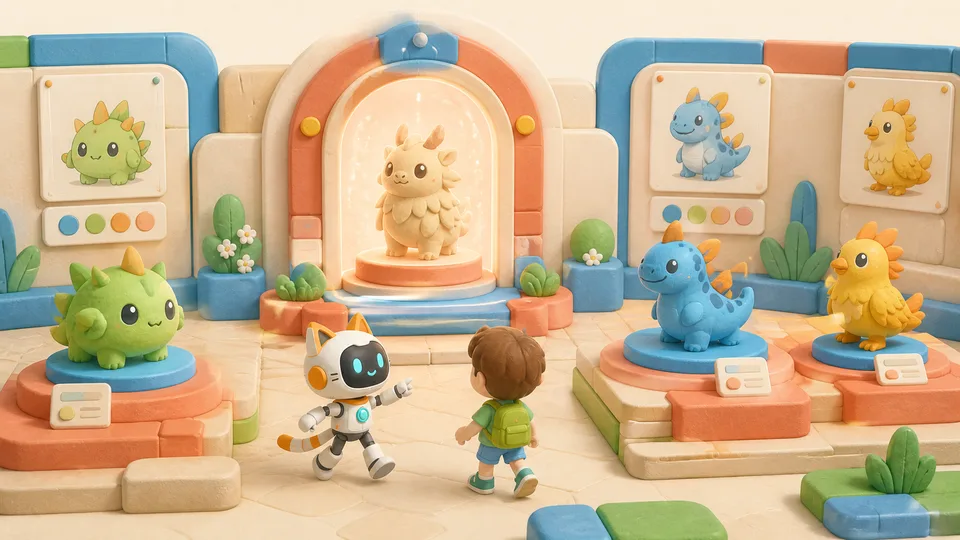
  3. Original artwork becoming a 3D exhibit in a miniature museumTerm 3

    Build Your Own AI 3D Museum

    Turn original images into 3D exhibits and build an explorable Three.js museum.

    Your child will build

    • Spatial design
    • Frontend interaction
    Part of the full-year pathway
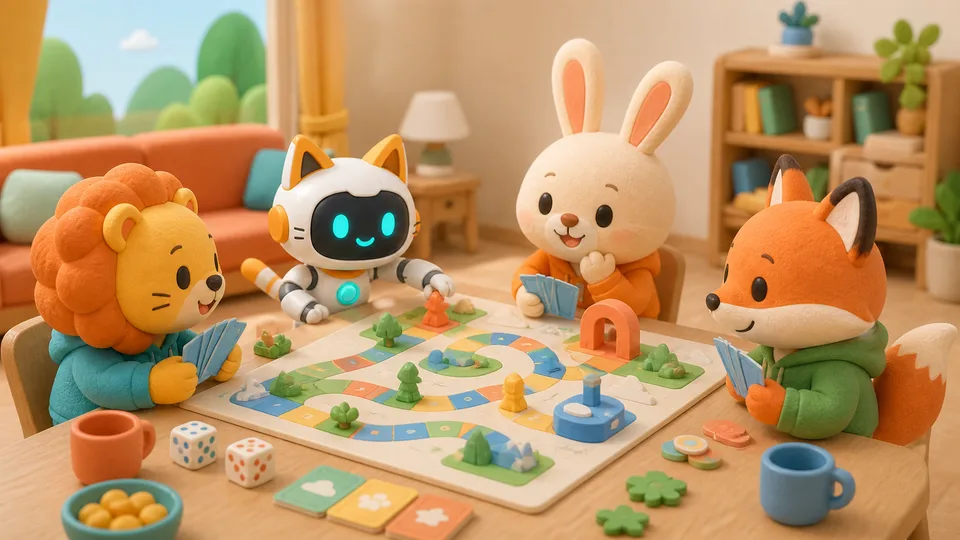
  4. Robot and animal family testing an original board gameTerm 4

    Build a Board Game for Your Family

    Prototype, test and refine an original, printable game for family game night.

    Your child will build

    • Family user testing
    • Rules & iteration
    Part of the full-year pathway

A child may join at the right term after placement. Families can also plan all four terms as one continuous learning year.

Plan the Level 5 year
AI BuilderLevel 6 · Ages 12–14

AI Inventor

Use design thinking to build and test a complete full-stack product.

By the end of the year: Explain how frontend, backend and saved data work together, then redesign from evidence.

What your child builds this year

  • Design thinking
  • Full-stack systems
  • Data & persistence
  • Evidence-based redesign
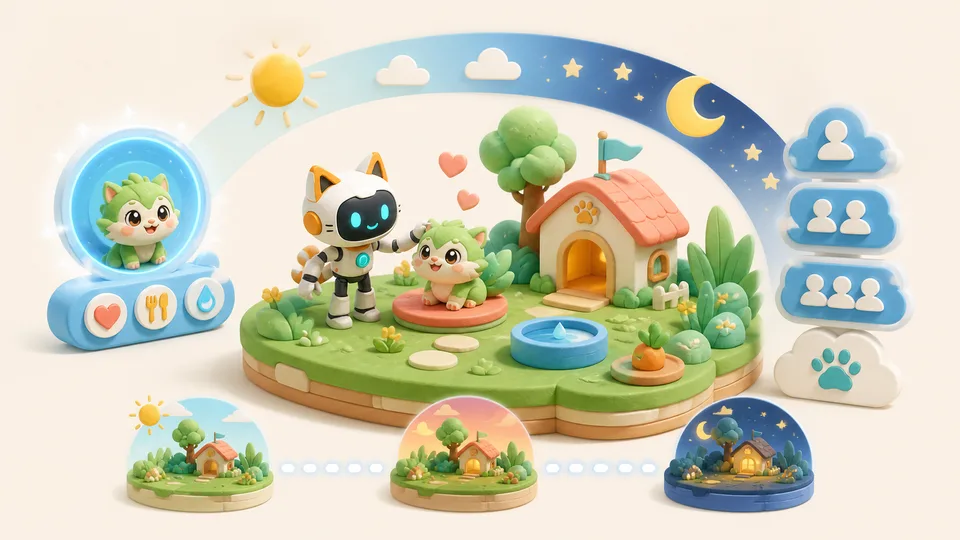
  1. Robot managing a persistent virtual pet habitat and care loopTerm 1

    Build Your Own Virtual Pet World

    Build accounts, persistent pet state, care rules and a complete product loop.

    Your child will build

    • Persistent data
    • Full-stack product loop
    Part of the full-year pathway
  2. Robot operating an original design shop and simulated order flowTerm 2

    Launch Your Own AI Brand & Store

    Create an original brand with a catalogue, inventory and simulated orders.

    Your child will build

    • Brand & user value
    • Inventory systems
    Part of the full-year pathway
  3. Connected tutor system with learner profile, trusted source and saved progressTerm 3

    Build Your Personal AI Tutor 2.0

    Save progress, identify misconceptions and adapt practice using trusted sources.

    Your child will build

    • Trusted-source AI
    • Adaptive learning logic
    Part of the full-year pathway
  4. Robot hero in an original role-playing world with quests and inventoryTerm 4

    Build Your Own AI RPG Adventure

    Connect characters, quests, inventory and saved progress in an original world.

    Your child will build

    • Connected systems
    • Saved state & rules
    Part of the full-year pathway

A child may join at the right term after placement. Families can also plan all four terms as one continuous learning year.

Plan the Level 6 year
Product BuilderLevel 7 · Ages 14–16

Product Builder

Use Git, review, testing and teamwork to launch reliable products.

By the end of the year: Provide live, installed or deployed product evidence and a traceable personal contribution.

What your child builds this year

  • Git & teamwork
  • Reliability & testing
  • Launch & deployment
  • Product ownership
  1. Robot connecting app modules and shipping them to a test phoneTerm 1

    Build & Ship Your First Mobile App

    Build a multi-module mobile product and prove a controlled installation.

    Your child will build

    • Mobile product architecture
    • Controlled deployment
    Part of the full-year pathway
  2. Connected players synchronising across an original multiplayer gameTerm 2

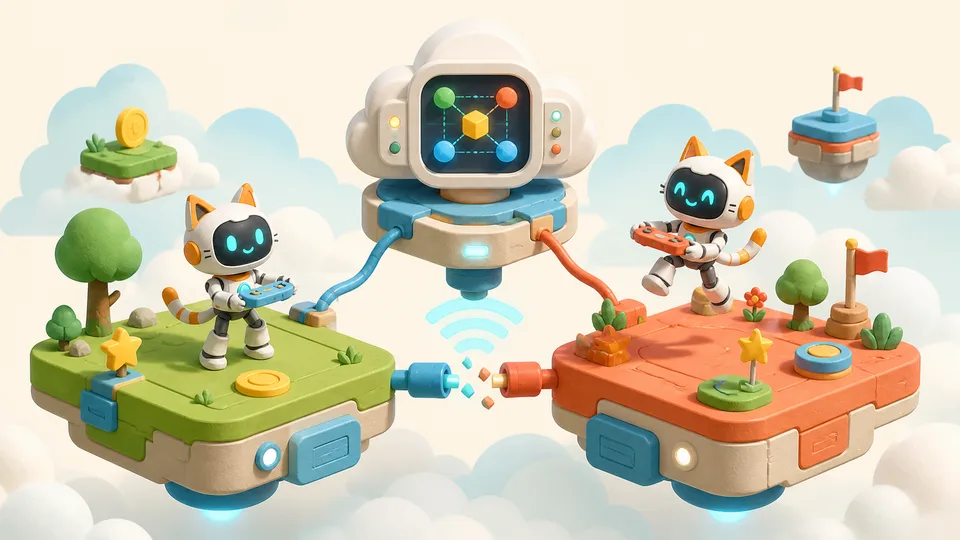
    Build & Launch a Multiplayer Game with AI

    Launch an original multiplayer game that handles shared state and reconnection.

    Your child will build

    • Shared state & reliability
    • Multiplayer testing
    Part of the full-year pathway
  3. Robot team building and launching a visual creator studioTerm 3

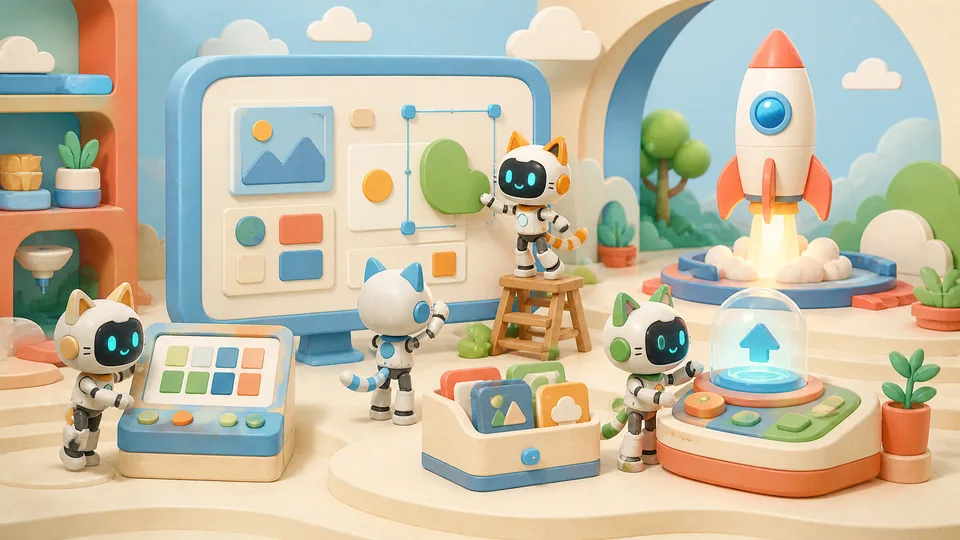
    Build & Launch Your Own AI Creator Studio

    Create a small, age-appropriate Canva-style tool that other creators can use.

    Your child will build

    • Creator workflow design
    • Product launch
    Part of the full-year pathway
  4. Airbotix robot deploying a safe task to a wheeled screen robotTerm 4

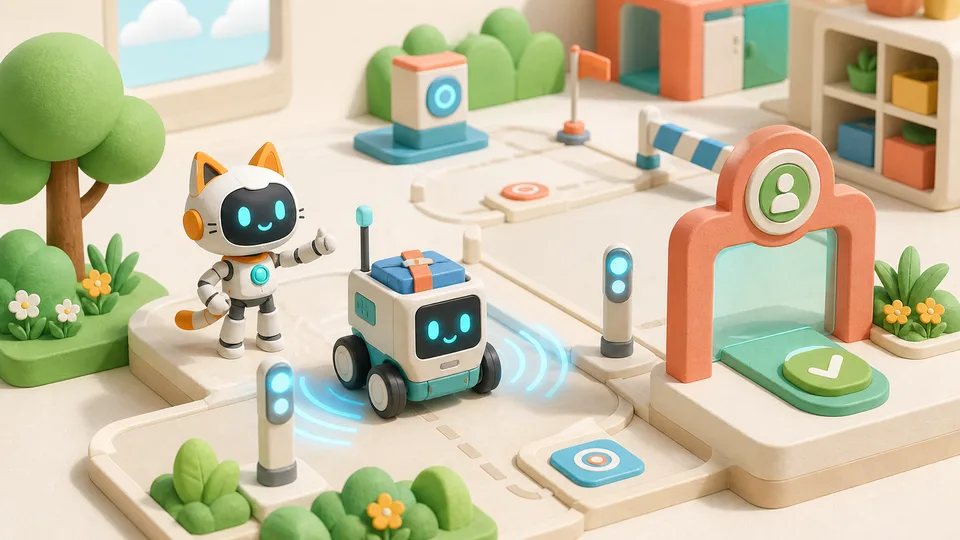
    Build & Deploy Your Own AI Robot

    Deploy a safe task product to an Airbotix wheeled robot with a small screen.

    Your child will build

    • Robotics integration
    • Safety & deployment
    Part of the full-year pathway

A child may join at the right term after placement. Families can also plan all four terms as one continuous learning year.

Plan the Level 7 year
Young AI EntrepreneurLevel 8 · Ages 16–18

Young AI Entrepreneur

Combine product judgement, leadership and responsible real-world validation.

By the end of the year: Launch and pilot a capstone, then use evidence to continue, pivot, narrow or stop.

What your child builds this year

  • Product leadership
  • Responsible AI decisions
  • Pilot & value validation
  • Entrepreneurial judgement
  1. Robot leading a responsible streaming platform pilot with creators and usersTerm 1

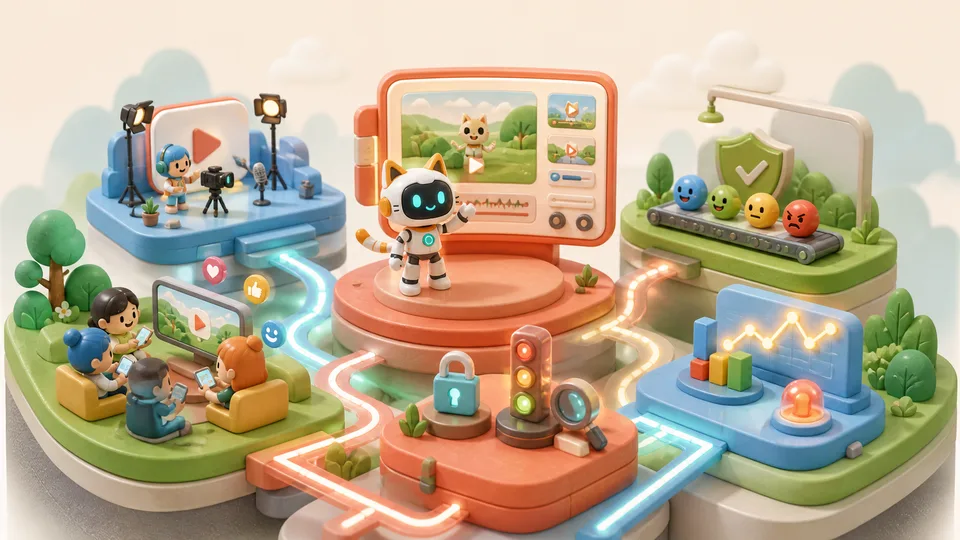
    Build & Launch Your Own AI Streaming Platform

    Pilot a responsible content platform with accounts, recommendations and analytics.

    Your child will build

    • Platform systems
    • Responsible recommendations
    Part of the full-year pathway
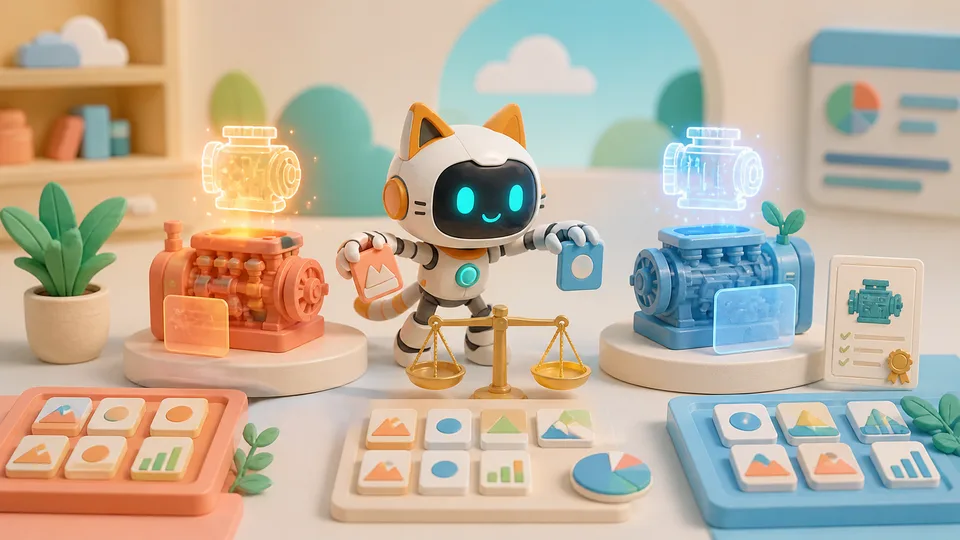
  2. Robot comparing two small AI models with balanced training dataTerm 2

    Train & Launch Your Own AI Model

    Train a small approved model, compare it with a baseline and publish a Model Card.

    Your child will build

    • Model evaluation
    • Responsible data judgement
    Part of the full-year pathway
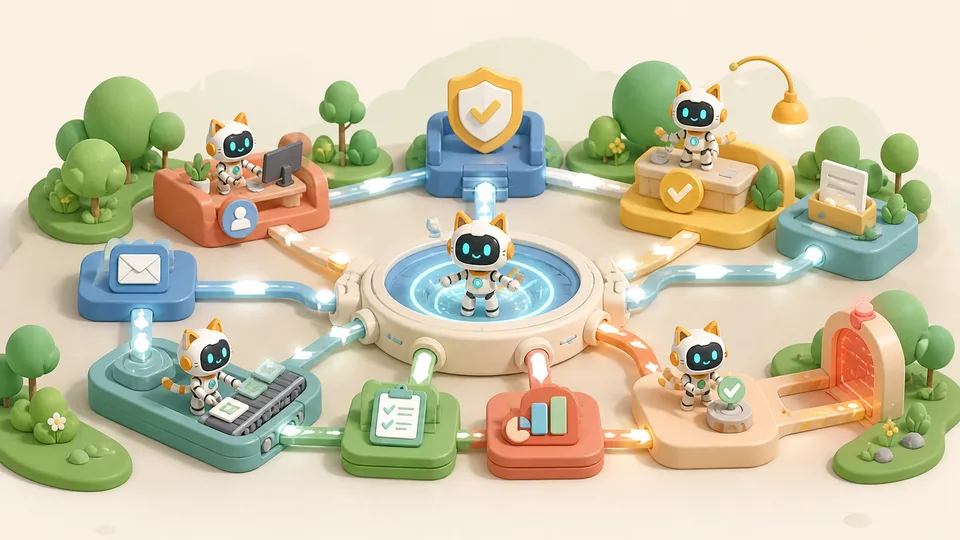
  3. Robot coordinating an organisation workflow with approval and safety gatesTerm 3

    Build an AI Agent for a Real Organisation

    Design an agent workflow with permissions, human approval, logs and fallback.

    Your child will build

    • Workflow & permissions
    • Human oversight
    Part of the full-year pathway
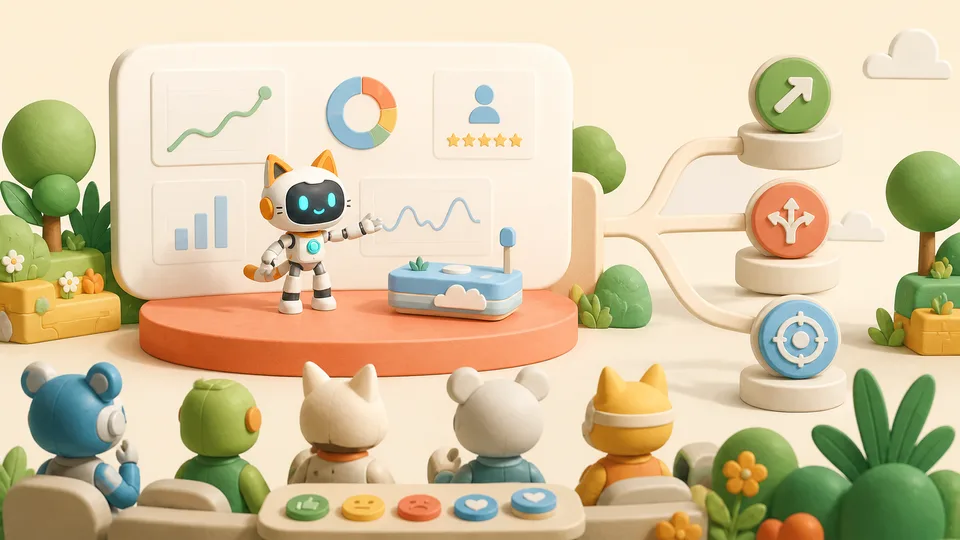
  4. Young robot founder presenting pilot evidence and next product decisionsTerm 4

    Young AI Founder Capstone

    Lead a published pilot and pitch the evidence, responsibility and next decision.

    Your child will build

    • Pilot validation
    • Leadership & pitch
    Part of the full-year pathway

A child may join at the right term after placement. Families can also plan all four terms as one continuous learning year.

Plan the Level 8 year

Age guides the first conversation. Evidence decides the level.

Ages 8–10 intentionally appear in both Story Creator and AI Builder. A child who loves reading, stories and visual creation can continue through Level 3. A child ready to read a project brief, break down a build and begin AI coding can enter Level 4 after placement.

Every level leaves four kinds of evidence: understanding the meaning, making something of their own, improving it from feedback, and explaining what they — rather than the AI — own.