Learn what comes after the prompt
Children use AI alongside real JavaScript, then inspect, run, test and improve the result instead of accepting the first answer.
For ages 8–14: build a browser game or interactive website with AI and real JavaScript, test and improve it, then pitch it for the chance to win from AUD $800 in cash prizes.

A short walkthrough of what your child builds, where they build it, and what gets sent in.
The challenge gives a child a real goal: turn their own idea into something people can play, prove how they improved it, and explain what they—not the AI—decided.
Children use AI alongside real JavaScript, then inspect, run, test and improve the result instead of accepting the first answer.
Every entry includes a working browser project, a short pitch and evidence of one meaningful improvement the child made.
A judging panel selects the Champion, 2nd and 3rd place. A separate public vote selects the Junior People’s Choice winner.
This is the short version for families. The Parent Portal shows the complete Competition Terms and Parent Consent before payment.
There is no prescribed story, character or school subject. The child starts with an original idea, turns it into something another person can play or use, then explains the decisions and improvements they made.
Native apps, hardware and robotics entries are not accepted in this edition.
A parent chooses the child, reviews and signs both documents, then pays the AUD $9 entry fee.
The child develops one eligible browser project. A parent may help with the rules, recording and upload—not the design, code or presentation.
Between 24 and 31 August 2026 AEST, submit the project, a 60–90 second English pitch, one improvement, a creator card and the parent’s media choices.
The entry is checked by a person for safety, privacy, permissions and originality before it can enter judging or the public Showcase.
The judging panel selects the Champion, 2nd and 3rd place. The public vote separately selects the Junior People’s Choice winner.
AUD $400 cash prize, plus a trophy, medal and certificate.
Decided by the judging panel.
Trophy, medal and certificate.
Decided by the judging panel.
Trophy, medal and certificate.
Decided by the judging panel.
AUD $400 fixed prize pool.
Decided by the public vote, separately from the judges.
Confirmed cash prizes total AUD $800: AUD $400 for the Champion, and an AUD $400 fixed prize pool for the Junior People’s Choice. No cash amount is announced for 2nd or 3rd place.
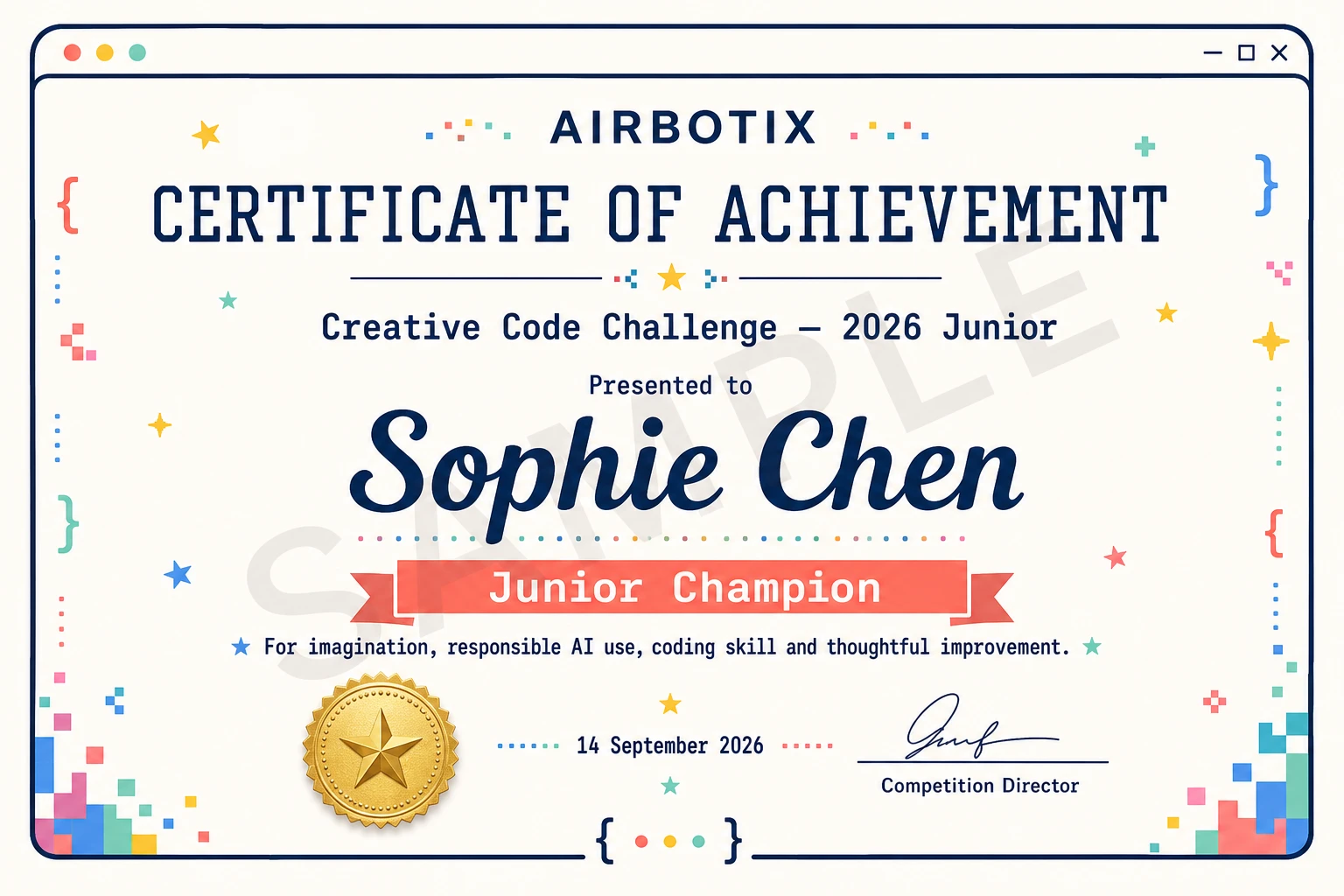
This sample uses the fictional name Sophie Chen so families can see the planned certificate design. Issued certificates will be personalised with the child’s name and award.
Design preview only. The final certificate may include minor production refinements.
People’s Choice does not change any judge’s score or the judged 1st, 2nd and 3rd placings. It is decided only from valid public votes.
Every approved entry receives the same public fields and wording. The Showcase order is shuffled, and live vote totals stay hidden.
Voting needs no account, but each normalised email identity can cast only one base vote in this edition.
Valid referrals and an approved group-share claim may add bonus votes, capped at 10 total votes for one voter. A link click alone earns nothing.
If entries tie for the most valid votes, they share the fixed AUD $400 People’s Choice pool equally.
A parent or guardian signs in, chooses the child entering, reviews the parent consent and competition terms, and pays the AUD $9 entry fee. Project submissions open on 24 August 2026.
Registration and payment take place securely in the Airbotix Parent Portal. Children do not register or pay on their own.
This is the first Creative Code Challenge Airbotix has ever run.
Register nowStars are spent by the Creative Code Studio features that consume them. 500 Stars is a starting balance, not unlimited use, and how far it goes depends on how your child works.
If the 500 Stars run out, continuing to use Stars-consuming features requires a parent-approved top-up. We are not telling you the challenge can definitely be completed for free.
These are the only two accepted project types. Whichever your child picks, a judge and a member of the public have to be able to open it in a browser and use it.
A game your child designs and builds themselves — something another child can pick up and play.
Must run in a browser
An interactive web project that responds to whoever is using it — a tool, a toy, a story, a simulation.
Must run in a browser
01
The Game Project or Interactive Web Project itself, running in a browser.
02
Your child explains their project in English, in their own words.
03
One thing they tried, tested and changed — showing the thinking, not just the finished screen.
04
The short profile shown beside the project.
05
A parent records, separately, what may be published — including title, voice and face.
AEST (UTC+10)
24–31 August 2026
The window in which a registered child submits their project, pitch video and creator card.
1–13 September 2026
The judging panel scores every entry against the 100-point rubric.
1–13 September 2026
Runs in parallel with judging, and decides the Junior People’s Choice award only.
14 September 2026
Judged placings and the Junior People’s Choice result are published.
All dates and times use AEST, UTC plus 10 hours.
Every assigned judge scores each eligible, non-recused entry independently against the same six dimensions. These are the actual points used to decide the judged placings.
How original the concept is, and how much of the design was genuinely decided by the child rather than copied from a tutorial or template.
Whether the finished project actually works and is understandable to play or use.
Evidence that the child tried the project, found problems and improved something in response.
How well the child can explain what their code, or the AI they directed, is doing and why.
How clearly the child explains what they built, why they built it and what changed after testing.
Respect for other people and their work: credited assets, no third-party work copied wholesale, and nothing unkind or unsafe.
The English Project Pitch is scored only on clarity of explanation—not accent, pronunciation, home language or sophisticated vocabulary. Simple words used clearly can receive full marks.
All six weights and their maximum scores are fixed. The total is calculated from the six marks rather than typed separately.
Judges score independently. One judge’s marks are not shown to another judge while scoring.
A judge who taught the child, helped with the entry or knows the family must record the conflict and step out; any marks they filed are discarded.
An entry needs at least two valid independent scores. If it has fewer, it cannot receive a judged placing until a reserve judge resolves the gap.
Judged ties are compared in this order: Testing and improvement, Original idea and creative decisions, then Code/AI understanding. An unresolved prize tie needs a recorded human decision.
Every entry is checked by a person for safety, privacy, permissions and originality before judging or public display.
Buying courses, Stars top-ups or anything else does not increase votes and does not affect judging. Stars are not redeemable for cash.
Every judge scores every entry against the same 100-point rubric, independently of one another. English is judged only on how clearly a child explains their work — never on accent, vocabulary or the language spoken at home.

AI Engineer · Software Developer · Coding Educator
An AI engineer with five years of experience who also teaches K–12 coding.

Full-Stack Developer, Flight Centre · AI Engineering Advocate
Builds reliable systems and champions practical AI engineering tools.

Senior Software Engineer at Xero
Brings 15 years of engineering experience across payment systems, backend architecture and frontend development, and mentors engineers to use AI responsibly as a force multiplier.

Certified TAE40122 Trainer · Business & Marketing Mentor
Over 10 years in Australian business and marketing, spanning e-commerce, digital marketing and career transitions; mentors learners through JR Academy in AI-powered workflows.

National Multicultural Partnership Manager, Bupa Australia
Leads multicultural growth, strategic partnerships and international engagement across Australia.
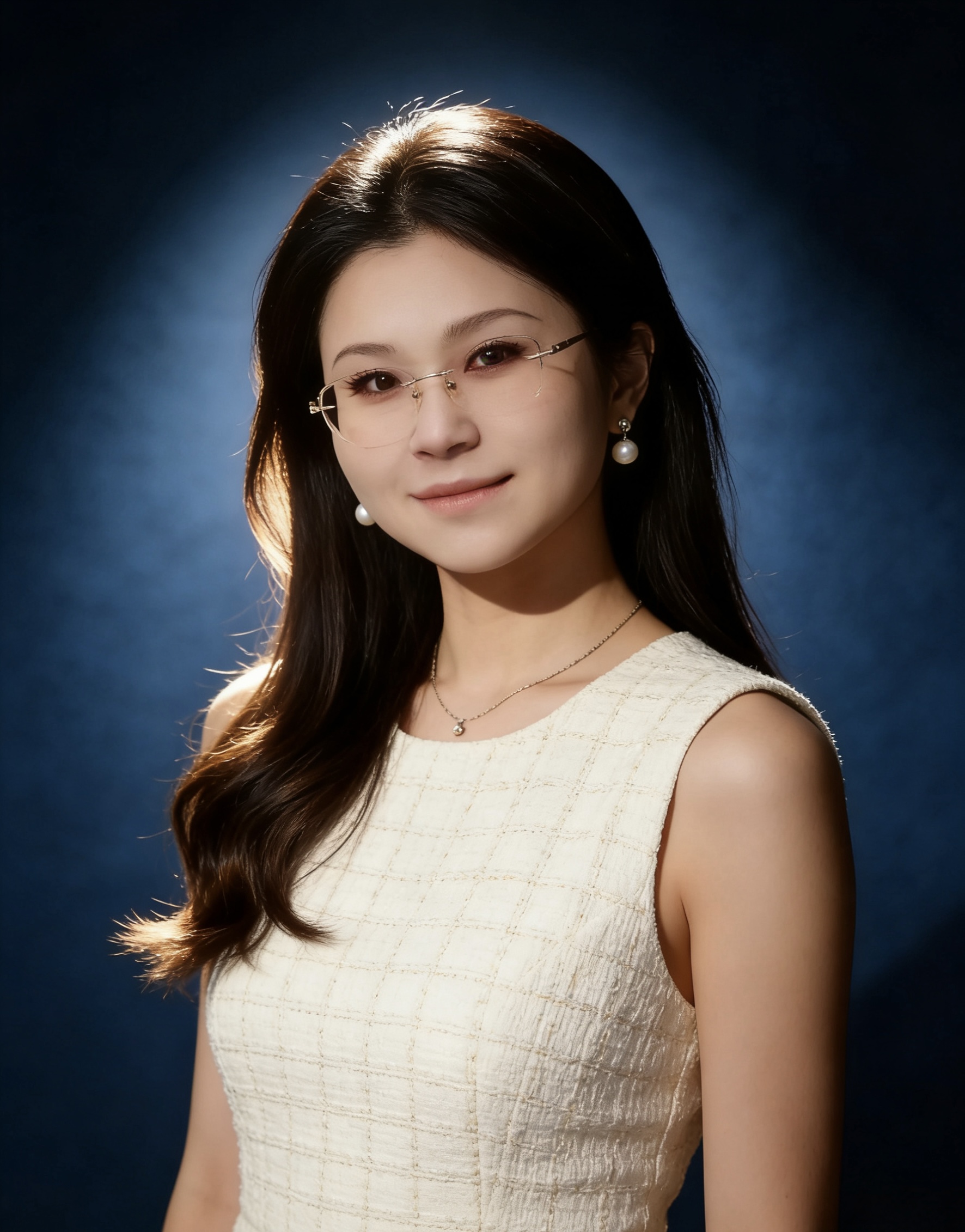
Founder & Chair, Melbourne Venture Capital Club · Founder, Qijie Investment
Has reviewed more than 100 early-stage ventures across AI, health, biotech and hard tech.
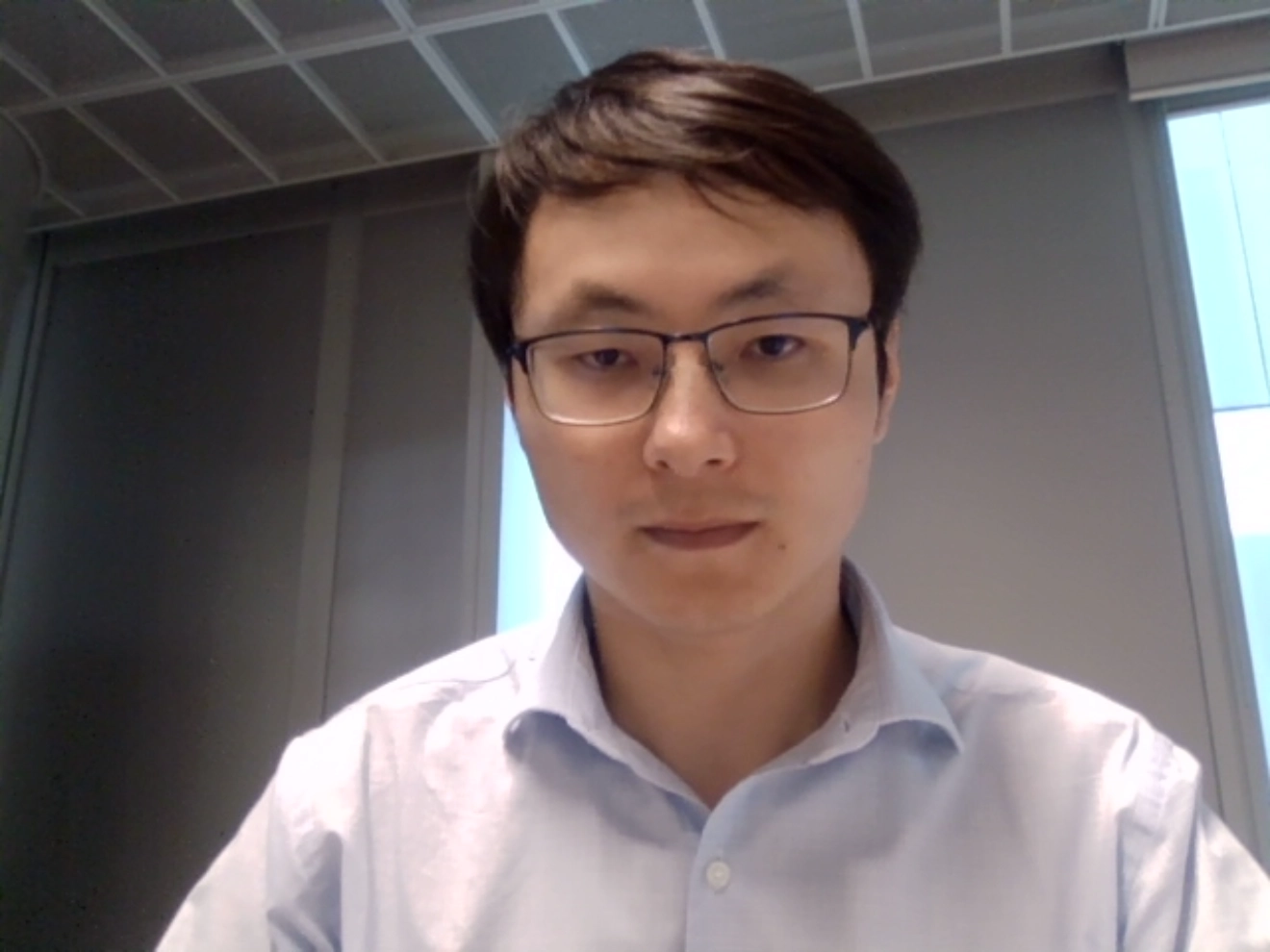
Data Science Director, Australian Taxation Office · Ph.D. in Computer Science
Leads data science at the Australian Taxation Office.

Founder, Australia Learning Centre · Founder & Director, Nexora AI Tech
Brings 20 years of business-building experience to AI consulting and education.

FTSE · Director, RMIT Centre for Atomaterials and Nanomanufacturing
Helps young people turn creativity into innovation through AI, coding and advanced manufacturing.

Professor · Senior Engineer · Co-Founder, OZBeat.ai
Economist and senior engineer working across AI, the digital economy and blockchain.

Ex-Google Engineer · Co-Founder, Airbotix
Helped build Gallery Go to over 100 million users and Google Photos to over a billion; later tech lead at Cash App (Block).

AI Lecturer, University of Southern Queensland
Researches machine learning and computer vision, published at CVPR, ICCV and NeurIPS.

Software Engineer at Canva
Builds software at Canva, drawing on nearly twenty years of software development experience and a Master’s in Computer Science from Zhejiang University.

Chinese Language Assistant · Teacher Aide
Originally from Beijing, she completed two master’s degrees in Australia and supports students across different year levels, including students with additional learning needs.

Founder & President, Adelaide Education Group (AEG)
Leads an education group spanning secondary, vocational and higher education, and research.
These organisations back the Creative Code Challenge. They do not host it, do not judge it, do not fund the prizes, and never receive entrant details — judging stays with the panel above and the prize pool is Airbotix’s own.


Creative Code Challenge · Junior Edition
Registration is open. A parent or guardian can review the consent and competition terms before completing the AUD $9 entry.
Register now